Cooking Mama: Let's cook!
- 4.0
- Rating
- 50.00M
- Installs
- Free
- Price

 Analysis by App-foxy
I approached Cooking Mama: Let's cook! as a quick, hands-on cooking game rather than a serious recipe guide, and that distinction matters. Its appeal is immediate: choose a dish, follow the activity, and try to finish the preparation cleanly enough to earn a satisfying result. The game comes from Office Create Corp. and sits in the educational category, but I would describe its learning value as light and practical rather than instructional in the way a real cooking course would be.
What kept me playing was the rhythm of short tasks. The game is easy to understand without a long explanation, so it works well when I want something cheerful for a few spare minutes. At the same time, the simplicity can become repetitive if I expect a deep management game, a detailed recipe collection, or a competitive experience with a large amount of strategic choice. My overall impression is that this is best enjoyed as a friendly cooking-themed activity, especially by younger players and casual users who prefer clear goals over complicated systems.
What the cooking loop feels like in everyday play
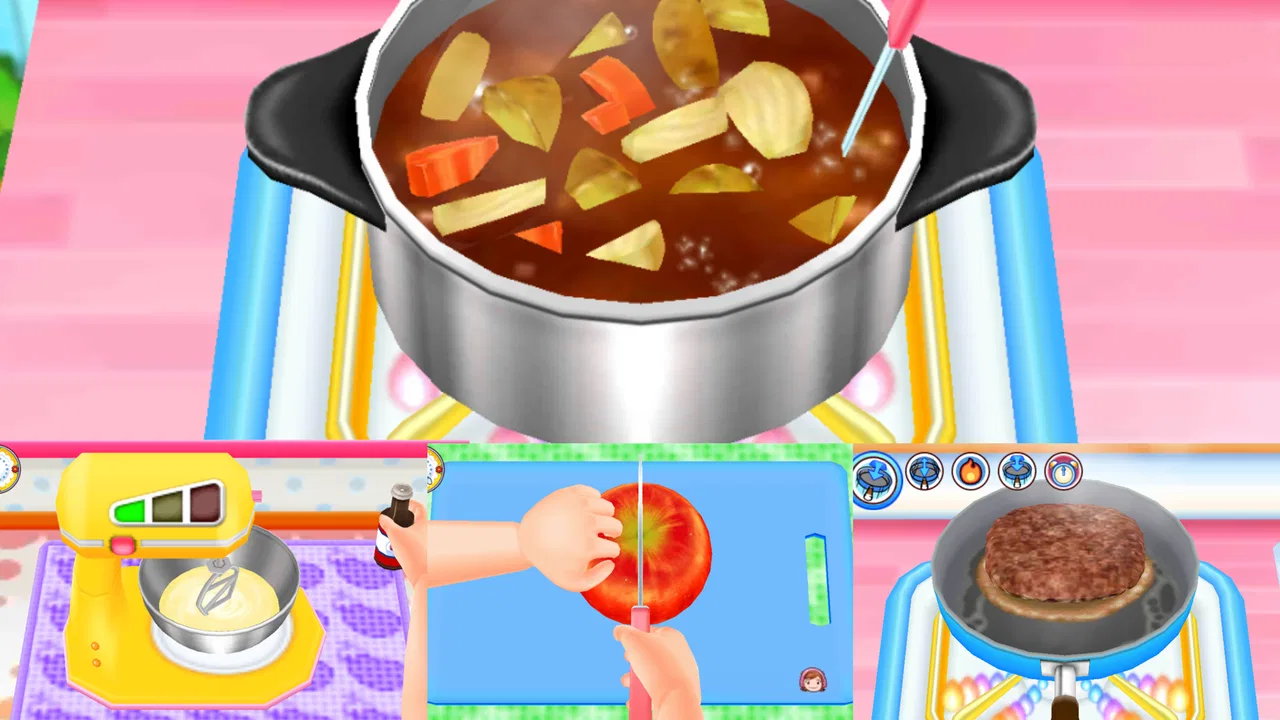
The central loop is built around preparing food and serving it. Each activity asks me to pay attention to the immediate task, respond at the right moment, and keep moving through the recipe. That makes the game feel more active than a simple menu-based simulator. I am not merely selecting ingredients and waiting for a timer; I am taking part in the preparation, which gives even a short session a sense of completion.
You May Also Like

 AccuWeather: Weather Radar
AccuWeather Review: A Quick, Clear Forecast for Everyday Decisions
For everyday plans, the best forecast is the one you can understand quickly. AccuWeather makes rain timing, radar, and local conditions easy to act on, with a few trade-offs.

 Hill Climb Racing
Why Hill Climb Racing Still Turns Crashes Into One More Run
A tiny car, a bumpy hill and one more upgrade: Hill Climb Racing keeps resurfacing because its simple chaos makes every near-miss feel personal.

 AliExpress - Shopping App
AliExpress Makes Global Shopping Feel Personal, but Shoppers Bear the Risk
AliExpress turns a global marketplace into a pocket-sized discovery engine. Its reach is useful, its shopping loop compelling, and its trade-offs easy to miss.

 Lords Mobile: Kingdom Wars
Lords Mobile Is a Kingdom-Building Routine, Not a Quick Match
A case-by-case verdict on the building, battles, device demands, and social commitments that make Lords Mobile rewarding for some players and exhausting for others.

 PDF Scanner app - TapScanner
TapScanner Makes Paperwork Easier to Capture, Check, and Share
TapScanner makes scanning with a phone feel less like a rescue operation and more like a dependable step in getting work done. Its capture tools are useful, though not flawless.

 Block Blast!
 Shows How Much a Puzzle Game Can Leave Out
A quiet grid game shows why puzzle players increasingly value instant clarity, repeatable skill and low-pressure play—and where the genre still needs to catch up.
More From Our News Desk
View All News


I found this structure particularly suitable for small breaks. Imagine waiting for an appointment or sitting on a train with a few minutes available. I can open the game, complete part of a cooking session, and put it down without needing to remember a complicated plot or a large set of controls. The approachable design also makes it a reasonable choice for a child who wants a game that can be understood quickly, although younger players may still need an adult to explain spending options and device settings.
The educational label is most convincing when viewed through the game’s emphasis on sequence and attention. Cooking tasks naturally encourage me to follow steps in order, notice visual cues, and avoid rushing through every action. Those are useful habits, but I would not use the game as a substitute for learning kitchen safety, measuring ingredients, or understanding how real food behaves. It presents cooking as an enjoyable series of interactions, not as a complete lesson in preparing meals.
That difference is important for parents. A child may come away with a better sense that recipes involve stages, but the game should not be treated as permission to use a stove, knife, or hot appliance without supervision. Its value is in playful familiarity with the idea of preparation, not in replacing an adult demonstration or a real recipe.
Why the controls are friendly but still demand attention
The actions are simple enough for a first-time player, yet the game is not entirely passive. I still need to watch what is happening and react instead of tapping randomly. This creates a pleasant middle ground: the controls do not feel intimidating, but success is more rewarding when I pay attention to timing and order.
One useful habit is to slow down during a new activity rather than trying to complete it at maximum speed immediately. The first attempt is a chance to learn the visual language of the task. Once I understand what the game expects, I can focus on improving the result instead of guessing. This makes repeated cooking sessions feel more purposeful and reduces the frustration that can come from treating every action as a race.
I also recommend playing with a stable grip and enough screen space to see the action clearly. On a small phone, quick gestures can feel less comfortable than on a larger display. That is not a flaw unique to this game, but it affects how enjoyable the short activities feel. For a young player, a tablet may make the interactions easier to follow, though the game’s basic structure remains accessible on a phone.
Progression, repetition, and the pressure to keep going
The strongest reason to return is the desire to prepare more dishes and improve the quality of the results. That creates a gentle form of progression: I learn the activities, become more consistent, and feel encouraged to try another session. It is a good fit for players who enjoy gradual mastery without needing a large story or a complex character system.
The trade-off is that the same structure can lose its freshness. Once I understand the pattern of a particular activity, repeating it may feel more like practice than discovery. Players who need constant novelty may find the cooking loop too narrow. I would keep expectations realistic: this is a compact casual game, not a full restaurant simulation with the depth of a management title.
There can also be a subtle pressure to continue after a successful dish. That feeling is not necessarily unpleasant, but it is worth noticing. A game that makes each completed task feel rewarding can easily turn a five-minute break into a longer session. I prefer setting my own stopping point, especially when handing the device to a child. The short activities make stopping possible, but the desire to improve or unlock the next experience can still encourage “just one more” play.
For players who dislike repetition, the best approach is to treat each session as a small challenge rather than expecting an endless stream of new mechanics. Try to improve precision, let a child explain the steps back to you, or use the game as a relaxed introduction to the idea of following a recipe. Those uses give the familiar actions more meaning than simply rushing through them.
Spending, fairness, and what I would check before playing
The game is free to download, which makes it easy to try without committing money at the start. It includes in-app purchases ranging from $0.99 to $15.99 per item. That is the purchase context I would keep in mind before giving the game to a child: the initial download costs nothing, but optional spending is part of the experience.
I do not see the free entry point as a problem by itself. It lets me test whether the cooking activities suit my taste before paying anything. However, “free” should not be confused with “without spending decisions.” If a child uses the device, I would set up the appropriate purchase restrictions first and explain that an on-screen option is not automatically something they should select.
The most useful way to judge fairness here is to ask whether I am comfortable enjoying the available cooking play without buying anything. For me, that is the right test. If the free portion already provides enough activity for occasional sessions, optional purchases can remain optional in the practical sense. If I feel pushed to spend simply to keep the experience comfortable, then the value becomes less attractive. Because individual purchase content and progression effects can change with the current version, I would inspect the in-game descriptions before buying rather than assuming what an item includes.
I also avoid treating a purchase as a shortcut to skill. The satisfying part of the game comes from learning the activity and performing it well. Spending should not be viewed as a replacement for attention or practice. For a family device, I would make the rule simple: play first, decide later, and never enter payment details during an excited moment after completing a dish.
Is it competitive, and does spending affect fairness?
I would not choose this title primarily for competitive play. Its strongest appeal is personal improvement and the pleasure of completing food-themed tasks, not proving that I am better than a large online field. That makes the fairness question different from the one I would ask about a multiplayer battle game. The important comparison is not whether another player can outspend me in a match, but whether paid options interfere with my own enjoyment of the cooking loop.
For a child, this can actually be a positive distinction. The game does not need to become a contest about rankings, expensive equipment, or public performance. A parent can frame it as a private activity: try the dish, notice what worked, and stop when the session is over. That removes some of the pressure found in games built around constant comparison.
Still, players who want clear competitive fairness may prefer a game designed around fixed rules and no purchase layer. A traditional puzzle game bought once, or a cooking title with a clearly stated premium model, may feel more predictable. This game is a better match for someone comfortable with a free starting point and willing to manage optional spending carefully.
What the popularity tells me, and what it does not
The game has reached over 50 million installs, with an average rating of 4.0 from around 838 thousand ratings and roughly 15 thousand written reviews. Those figures show broad interest and suggest that the basic concept works for many people. They do not guarantee that every player will enjoy the repetition, the purchase structure, or the level of educational depth.
I read that popularity as a reason to try the game, not as proof that it is the best cooking game for everyone. A large audience can include children, parents, casual players, and longtime fans who want different things. My own recommendation depends more on the intended session than on the size of the audience: it is a good pick for approachable cooking play, but not necessarily for simulation fans or players seeking a serious learning tool.
Who should install it and who should look elsewhere
I would recommend it to families looking for a colorful, easy-to-start activity that can introduce the idea of following cooking steps. It also suits casual players who like short tasks, immediate feedback, and light repetition. Someone who enjoys practicing a simple interaction until the result improves may find more satisfaction here than someone who needs a constantly changing map or a long narrative.
I would be more cautious about recommending it to adults searching for authentic culinary education. The game may encourage attention and sequencing, but it does not replace a cookbook, a supervised kitchen lesson, or a video that explains technique and safety. If the goal is to learn how to prepare a specific real meal, a dedicated recipe app is the better tool.
It is also not my first choice for players who want deep restaurant economics, staff scheduling, ingredient markets, or detailed customization. A management simulator would offer more decisions, while a competitive cooking game would provide a stronger reason to compare performance with other players. This title focuses on the act of completing cooking activities, and that narrower focus is both its charm and its limit.
Device compatibility is fairly broad. The current version is 1.128.1 and requires Android 6.0 or later, so anyone with an older device should check compatibility before trying to install it. The game is rated Everyone, which fits its accessible presentation, but an age rating does not remove the need for adults to supervise spending or decide whether the play style is suitable for a particular child.
The game first appeared on May 14, 2015, and its long presence helps explain why the concept feels established rather than experimental. I would not expect a brand-new design philosophy from it. Instead, I see a familiar, polished casual format that has remained relevant because preparing virtual food is easy to understand and pleasant to revisit.
My trust verdict after weighing the trade-offs
My recommendation is positive, with clear boundaries. I like the way the game turns cooking into a sequence of small actions that are simple to start but rewarding when I pay attention. It is easy to imagine using it during a short break, sharing it with a child under sensible supervision, or returning to it when I want a cheerful activity without a demanding story.
The main caution is not the cooking concept; it is expectation management. This is not a real cooking instructor, not a deep restaurant simulator, and not the ideal choice for someone who wants a purely premium experience with no optional purchase decisions. The free download is useful for testing the game, while the listed in-app purchase range means I would review spending controls before letting a child play independently.
Office Create Corp. has made a game that communicates its central idea quickly: prepare food, serve it, and enjoy the result. That straightforward design is why I can recommend it to casual and family players. I would skip it only if I needed advanced culinary instruction, complex management, or a strongly competitive structure. For everyone else, it is worth trying free first, playing slowly enough to learn the activities, and deciding based on the actual enjoyment of the cooking loop rather than on the promise of endless novelty.
FAQs for Cooking Mama: Let's cook!
01What is Cooking Mama: Let's cook! about?
Cooking Mama: Let's cook! is a delightful cooking simulation game where players can prepare various recipes by following interactive steps. The game combines fun mini-games with real-life cooking techniques, making it engaging for both children and adults. Players can also grow their own ingredients and manage a restaurant, enhancing the overall experience.
02Is Cooking Mama: Let's cook! suitable for children?
Yes, Cooking Mama: Let's cook! is designed to be family-friendly and suitable for children. The game features simple controls and colorful graphics that appeal to younger audiences. Additionally, it promotes learning through interactive cooking activities, making it an educational tool for kids to understand basic cooking methods and food preparation.
03Does Cooking Mama: Let's cook! require an internet connection?
Cooking Mama: Let's cook! can be played offline, allowing users to enjoy the game without an internet connection. However, certain features, such as updates, special events, or in-app purchases, may require an internet connection. Playing offline ensures a smooth experience without interruptions from network issues.
04Are there in-app purchases in Cooking Mama: Let's cook!?
Yes, Cooking Mama: Let's cook! offers in-app purchases. Players can buy additional content, such as new recipes, ingredients, or tools, to enhance their gameplay experience. While these purchases can add value, they are entirely optional, and the game can be enjoyed fully without spending money.
05What devices are compatible with Cooking Mama: Let's cook!?
Cooking Mama: Let's cook! is available on both Android and iOS platforms. It supports a wide range of devices, including smartphones and tablets. To ensure optimal performance, it is recommended to have a device with the latest operating system updates and sufficient storage space for smooth gameplay.
Pros
- Engaging mini-games enhance cooking skills.
- Colorful graphics appeal to all ages.
- Intuitive controls make gameplay easy.
- Regular updates with new recipes.
- Encourages creativity and experimentation.
Cons
- In-app purchases can get expensive.
- Some recipes require internet connection.
- Ads can interrupt gameplay experience.
- Limited replayability for seasoned players.
- Occasional bugs may disrupt progress.

Cooking Mama: Let's cook!
Gallery